


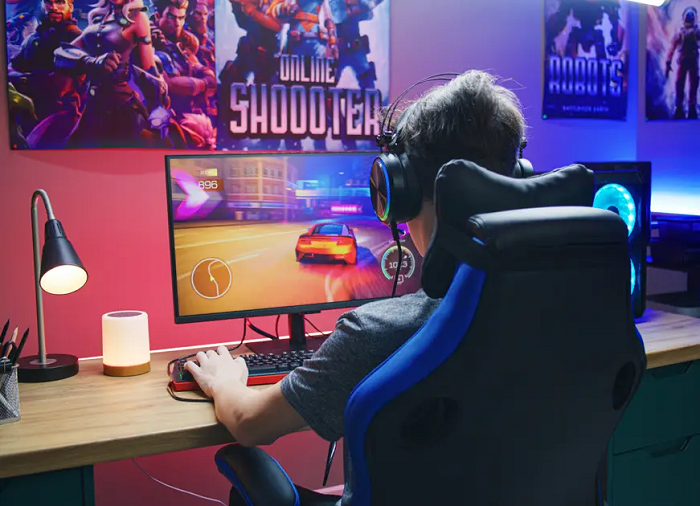
The landscape of leisure has undergone a radical transformation over the last decade. Historically, entertainment was a segmented experience—you either engaged in physical sports, sat down for a quiet board game, or visited a theater for a passive viewing experience. Today, the lines have blurred, giving way to a digital renaissance where strategy, luck, and social interaction coexist in a single ecosystem. This shift isn’t just about technology; it’s about a fundamental change in how the human brain seeks engagement in a fast-paced world.
At the heart of this evolution is the “gamification” of our daily routines. We use apps to track our fitness goals with leveling systems, and we learn languages through point-based challenges. This psychological hook—the desire to progress and overcome obstacles—is what makes modern interactive platforms so compelling.
The Psychology of Choice and Chance
One of the most intriguing aspects of digital entertainment is the balance between calculated strategy and the thrill of the unknown. Humans are naturally wired to respond to “variable ratio reinforcement,” a psychological concept where rewards are delivered at unpredictable intervals. This is a primary driver behind the popularity of many high-energy digital platforms.
For instance, when a player engages with a high-performance slot gacor, they aren’t just looking for a result; they are participating in a sensory experience. The combination of visual feedback, rhythmic audio, and the anticipation of a favorable outcome creates a focused mental state. This “flow state” allows the mind to decompress from the rigors of a standard workday, providing a specialized form of digital escapism that is both accessible and immediate.
The Resilience of Ancient Strategy
While high-tech graphics and rapid-fire mechanics dominate much of the market, there is a parallel trend moving in the opposite direction: the digital revival of ancient, complex strategy games. It seems that no matter how advanced our hardware becomes, the human mind remains deeply attracted to patterns and long-form tactics.
Consider the enduring legacy of tile-based games originating from Asia. The strategic depth required to master a game of mahjong has allowed it to transition seamlessly from physical ivory tiles to high-definition mobile screens. Unlike pure games of chance, these classics require memory, probability assessment, and a keen eye for an opponent’s behavior. The digital versions of these games have fostered a global community, allowing a player in New York to test their wits against someone in Tokyo, proving that strategic thinking is a universal language.
Why We Seek Digital Challenges
What is it about these virtual environments that keeps us coming back? Experts suggest several key cognitive benefits:
- Neuroplasticity: Engaging in different types of games—from fast-paced reflexes to slow-burn puzzles—forces the brain to adapt and form new neural pathways.
- Decision-Making Skills: Whether you are managing resources in a simulation or deciding when to hold a hand in a card game, you are exercising your executive function.
- Stress Management: In moderation, interactive entertainment acts as a “reset button” for the nervous system, diverting focus away from real-world anxieties and toward a controlled, solvable problem.
The Social Component of Virtual Spaces
Perhaps the most significant change in the modern era is the death of the “lonely gamer” stereotype. Today, these platforms are essentially social networks. From live chat features to global leaderboards, the solitary act of playing has become a communal event. We share strategies, celebrate wins, and even form long-term friendships through these shared virtual struggles. This connectivity is vital in an increasingly digital world, providing a sense of belonging and healthy competition.
Achieving a Balanced Digital Diet
As with any form of consumption, the key to enjoying this digital renaissance is balance. The most fulfilled users are those who treat their screen time as a “digital diet.” This involves mixing high-intensity games that offer quick thrills with slower, more methodical puzzles that challenge the intellect.
By diversifying the types of platforms we engage with, we ensure that our leisure time remains both productive and restorative. We aren’t just “killing time”—we are exploring the vast capabilities of the human mind through the lens of modern technology. Whether you are chasing a jackpot or meticulously building a winning hand of tiles, you are part of a grand tradition of play that spans centuries and continents.